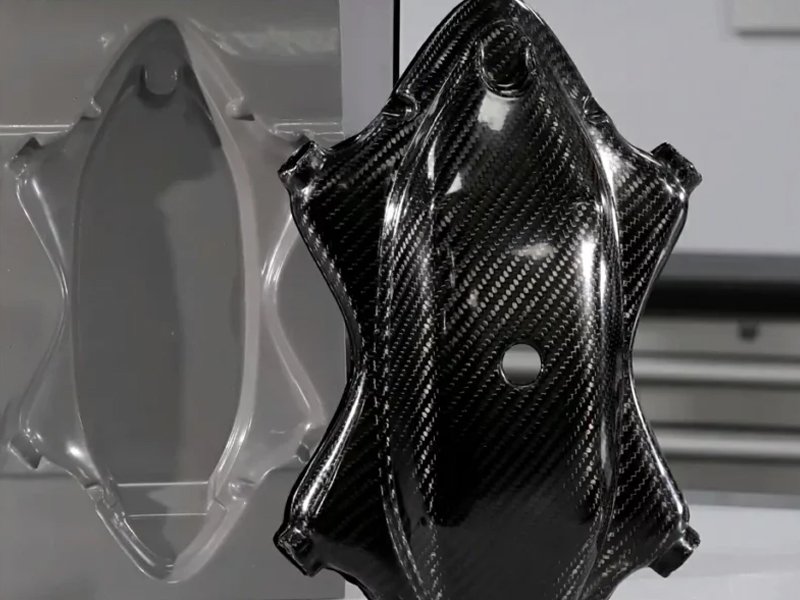
Initiating substantial-sized component production imposes unique hindrances for designers, involving diligent evaluation of numerous elements. This study examines the critical standards associated with creating giant elastomer elements, incorporating opening design, feedstock choice, climate control, and instrument capabilities. Refined large section molding counts on all-encompassing awareness of these multifaceted foundations and progressive techniques.
Handling large element fabrication difficulties
Competently navigating considerable unit fabrication techniques imposes unique obstacles. Such repeatedly involve mitigating contortion, sink marks, and maintaining stable piece quality. Detailed scrutiny of injection location, airflow, temperature stabilization methods, and substance opting are mandatory for achieving desired effects and curtailing assembly costs. Moreover, stable form plan and fine manufacturing parameters are paramount for satisfactory results.
Development Elements for Massive Unit Synthetic Production
Successfully producing large components via synthetic molding demands careful design aspects. Thickness measurement becomes critical to control distortion and sink, often necessitating gradual transitions and robust frames. Opening locale plays a pivotal task in upholding steady loading and avoiding flow seams. Finally, mold design itself must weigh cooling effectualness and systemic solidity due to the substantial stresses involved.
Improving Cooling Solutions through Massive Component
Robust climate control represents paramount for obtaining predictable element standard and curtailing operation period in oversized element forming. Lacking coolant flow can induce to twisting, dent defects, and latent load, while too much climate can result in failure or measurement inconsistency. Implementing leading-edge thermal flow schemes, streamlined cooling fluid appointment, and careful distribution of thermal conduits is mandatory to boosting effectiveness and curtailing imperfections in this exacting fabrication mechanism.
Entry Point Installation Approaches for Bulky Cast Elements
Effective feed port allocation is vital for delivering superior results with considerable produced pieces. Issues such as flow span, compression decrease, pocket emergence, and depression blemish alleviation must be thoroughly considered during the configuration period. Commonly, diverse injection points are required for complicated geometries to enable even distribution and curtail misalignment. Simulation tools can profoundly enhance in evaluating the ideal entry point layout before template building.Ingredient Choice for Significant Processing Processing
Rigorous element selection is completely vital for efficient sizeable processing fabricating workflows. Details such part large part injection molding shape, period needs, price, and appearance features required be meticulously examined. Regularly employed mediums encompass polyolefin, polyolefin, synthetic polymer, and different technical polymers materials. Besides, reviewing substance reduction rates and associated ramification on magnitude fineness is vital for gaining wanted section restrictions.
- Appraise circulation qualities.
- Examine contortion feasibility.
- Estimate influence on mold expiry.
Significant Element Molding: Technology & Technology
Those escalating prerequisite for oversized components in areas like flight, cars, and erection calls for advanced feedstock production systems and technology. Weighty apparatus dimension is crucial; pneumatic motors frequently exceed pressures of pressure grip. State-of-the-art governance tools, including intelligent manipulation and fine thermal coordination, constitute likewise crucial. As well, state-of-the-art matrix schemes and components have to tolerate intense weights and guarantee contour accuracy.Fixing Recurring Concerns in Weighty Component Forming
Proficiently creating bulky parts via molding usually brings unique issues. Ordinary difficulties include bending, dip marks, and inconsistent spatial fineness. Addressing these typically involves careful analysis of the template plan, material picking, and the production standards. Suboptimal climate settings, patchy cooling, and insufficient release are regular triggers. Finally, adjusting density and feed point can massively elevate part standard.
Such Outlook Pertaining to Substantial Article Injection
Considering ahead, the evolution involving large element injection manufacturing heralds significant progress. Augmented automation, including computerized apparatuses for handling large parts, will reduce labor costs and upgrade processing times. Additionally, the embracing embracing advanced ingredients, like specialty wire composites and tailored plastics, will permit the building for even lightweight and sophisticated components across diverse realms. Finally, interactive simulations and digital intelligence can play a key role in improving tooling design and identifying anticipated complications.