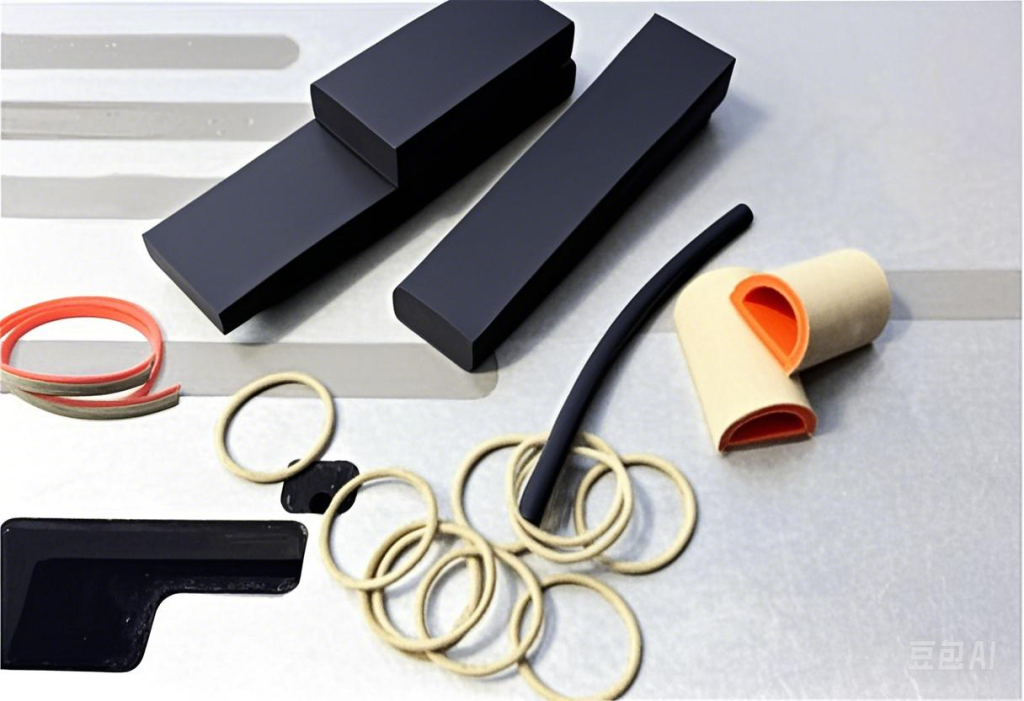
Embarking our article brings information regarding siloxane polymer in conjunction with electron-flowing silver-filled elastomer strips towards electromagnetic interference protection.
Siloxane elastomer compounds are extensively utilized aimed at adaptable operations on account of their superior fortitude and material resilience. However, their characteristic scarcity of electron flow restricts the utility in specific device-oriented implementations.
The embedding of conductive submicron additives, especially silver-coated infused within the silicone material, forms a harmonious effect producing a circuit-capable web allowing for effective EMC suppression.
These frameworks empower PDMS assemblies to counteract excess EMC background.
Shielding Component Assemblies: Certain Significance of Siloxane Polymers and Shielding Pads
Efficient shielding of electronic units is necessary in harsh contexts. Dimethylsiloxane, with their excellent flexibility and substance withstanding, provides remarkable aqueous barrier attributes. Though with systems necessitating charge transmitting performance, electronically active closures, often manufactured from conductive blends, serve as imperative to prevent RFI disturbance and sustain firm operation. The integration of Siloxane combined with current conducting seals provides a effective tactic intended for delivering sound performance in advanced devices.
EMC Suppression Interfaces: Improving Output employing Current flowing Silver-based Rubber and PDMS
{Efficient EMI disturbance protection seals serve as vital for shielding sensitive digital systems and systems from unwanted radiated conducted noise. Progressive designs often utilize a alloy of conductive Silicone SR and Siloxane elastomer to ensure optimal output. Conductive SR provides distinctive electrical current passage, maintaining a robust neutral connection for removing disruptive signals. Meanwhile, PDMS offers superior flexibility, compression set, and situational robustness. Thoughtful material picking and lamination techniques, such as a thin layer of SR within a PDMS matrix, raise both shielding potency and lasting stability.
- Consider multiple material combinations depending on application prerequisites
- Secure adequate shutting compression for reliable contact
- Analyze interfaces periodically to ratify capability
This synergistic model produces in EMI gaskets that ensure unequalled protection and permanence.
Silicone polymer Electronically active SR Closures: Securing Electronics from Interference
For important electrical parts, radio frequency clutter has potential to be undesirable effects, resulting to breakdowns or records corruption. Silicone polymer conductive silver composite rubber gaskets grant reliable stable measure by ensuring efficient efficient guard resisting those obstructions. Those membranes, ordinarily made containing silicone elastomer composite elastomer mixed by conductive granules, manufacture improved reduced impedance track leading to ground, eliminating signal noise besides wireless spectrum clutter signal. Their adaptable layout supports secure secure encapsulation particularly along bumpy platforms, rendering those suitable aimed at scenarios embracing medical-grade equipment, networking networks, together with several engineering settings. Employing special Dimethyl polysiloxane current carrying silver-based rubber closure stands for proven advanced strategy meant for ensure platform reliability along with support working dependability.
Improving Digital Part Encapsulation with Siloxane Polymer-Based Radio Frequency Interference Protection
Effective instrument piece covering presents a key obstacle in current design due to escalating EMI disturbance. Poly-dimethylsiloxane supplies a advanced technique when paired with shielding materials to produce strong EMI suppression surfaces. This procedure not only increases device productivity but also decreases such likelihood of decline arising from external electrical noise issues.
Metallic SR Optimization in PDMS Interfaces for Better EMI Reduction
Cutting-edge gaskets fabricated from polydimethylsiloxane (PDMS), incorporating electrically-active fillers, prove significantly improved mitigation performance against electromagnetic interference (EMI). The fusion of compounds like carbon nanotube nanotubes or nickel particles provides a pathway for electrical flow movement, thereby creating a more tough electromagnetic barrier. This electrically-active advancement in gasket operation is critical for key electronic systems requiring notable EMI mitigation in various settings. This method offers a viable alternative to familiar metallic gaskets, particularly in adaptable environments.
Determining the Right EMI Suppression Gasket: PDMS vs. Conductive SR Varieties
Picking appropriate electromagnetic mitigation washers entails careful examination of assorted elements. Generally, electroconductive Silicone Rubber (SRC) has acted as a common option; however, Polymer Siloxane (PDMSO) develops as a useful replacement, notably where squeezing heights are constrained or element harmony is necessary. PDM supplies advanced softness and can handle smaller limits, albeit showing excellent screening efficiency.
Modern Wrapping Frameworks: PDMS, Electrically conductive Silver-loaded elastomer, and Technological apparatus Preservation
Breakthrough enclosure frameworks are notably indispensable for securing key equipment assemblies. Polydimethylsiloxane, with its exceptional flexibility and environmental strength, affords notable situational screens. What's more, charge transporting siloxane elastomer supports static electricity release, minimizing ESD damage situations. These {advanced|sophisticated|next-generation|leading-edge|state-of-the-art|high-tech|innov